







Search Results for: tiger-head mask

A customer wearing a tiger head mask and holding a spiked club was seen ordering at a Starbucks store in Ningbo; the staff calmly called the police to handle the situation.
Recently, a bizarre scene unfolded inside a Starbucks store at a Yizhaoweide Plaza in Xiangshan, Ningbo, Zhejiang: a customer wearing a tiger-head mask and carrying a spiked club appeared in the store, drawing widespread attention from customers present and netizens alike. According to multiple media reports, the incident occurred on November 27, and video showed the customer standing by the front counter, waving the spiked club while communicating with staff. The incident quickly gained traction on social media, with many people expressing confusion over the person's behavior and speculating that the motive might have been performance art or a prank. On November 30, staff at the store involved responded, saying that the customer did not rob the store of coffee or injure anyone, that employees promptly called the police and reassured customers, and that the individual subsequently left on their own. This incident not only sparked discussion about safety in public places, but also left people reflecting on the unexpected situations service industry workers face. [more…]
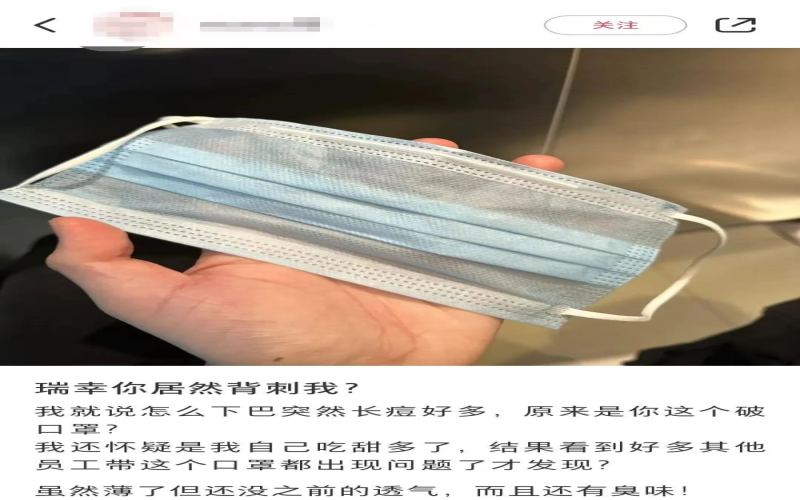
New masks at Luckin Coffee stores cause skin problems for employees, lightweight material suspected as the source of irritation.
In the food service industry, it is already the norm for employees to wear masks at work. However, during the hot summer days, keeping one's mouth and nose covered under a mask for long periods inevitably causes discomfort. Recently, employees at Luckin Coffee stores noticed that the new masks distributed by headquarters differ noticeably from the old version—lighter in color and thinner in material, yet breathability does not seem to have improved as expected. After wearing them for a few days, many employees developed red bumps and itching on their chins and cheeks, and some suspect this batch of "veil masks" is the culprit behind their skin breakouts. Employees also reported that the new masks have an odor, and a few sensitive individuals experienced itching in the nose after putting them on. Everyone worries that these thin masks not only have questionable protective effectiveness but may also trigger allergies due to material issues. Some employees have already said they will buy their own masks as replacements. Although requiring masks is intended for food safety reasons, the skin problems reported this time may be worth Luckin re-examining the quality of its masks. [more…]
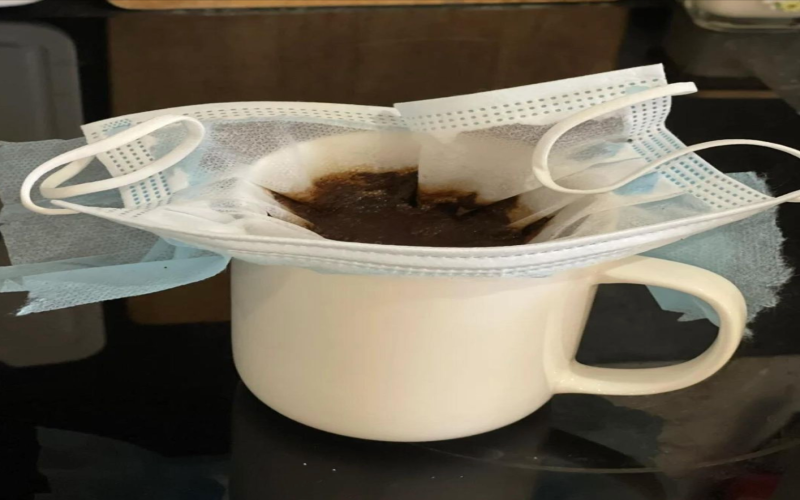
Expired Masks Used as Coffee Filters? Experts Explain Polypropylene Material Risks; Front Street Coffee Advises Against Trying It
Recently, a social media post in which a user brewed drip coffee using a face mask instead of filter paper sparked heated discussion. In the photo, the mask was hung over the rim of the cup to serve as a filtering tool, and the caption claimed it had a "unique taste." This move quickly drew a flood of criticism and concern. Some questioned whether the mask's water-resistant layer and adhesive layer might release toxic substances, while others joked that this was an attempt to compete with "Lianhua Qingwen coffee." In fact, this practice stemmed from a "clever trick" some netizens came up with to avoid wasting expired masks, but medical experts point out that the non-woven fabric in the inner layer of masks is made of polypropylene (PP), and although the amount of harmful substances released when heated is trace, it is still not recommended for contact with food. Front Street Coffee reminds everyone that coffee filter paper costs about the same as a mask, and choosing standard filter paper is the safe and reliable way to brew coffee. [more…]
The Complete Guide to Coffee Grounds: From Facial Scrub to Hair Mask, a Detailed Look at Coffee Beauty, Skincare, and Practical Life Hacks
Coffee has long been part of the daily rhythm for many urbanites, but most people treat it merely as a pick-me-up. In fact, coffee's uses go far beyond drinking—the grounds left after brewing are equally promising for beauty and skincare and for household life. This article systematically introduces the specific ways to use coffee grounds for facial care, hand cleansing, and hair maintenance, including practical recipes such as exfoliating scrubs, firming masks, odor removal, scalp sprays, and hair masks, each with detailed materials and step-by-step instructions. If you happen to have coffee grounds on hand, why not follow along with this article and try these simple, natural tricks. [more…]
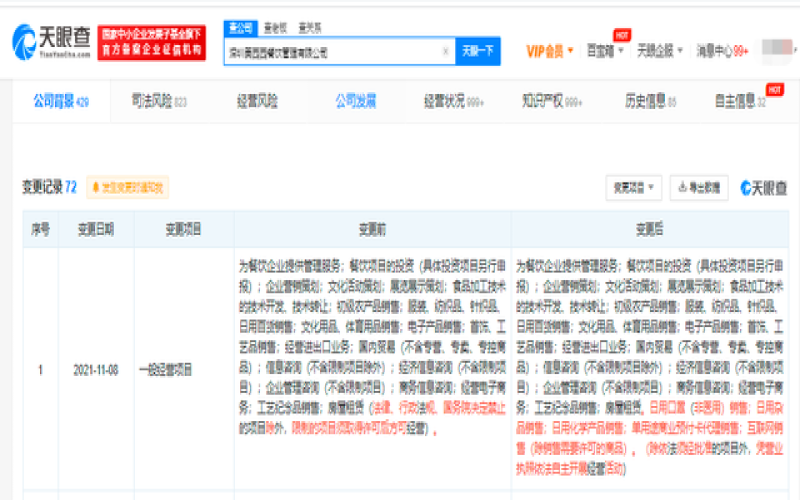
HEYTEA Adds Mask Sales Business: How Brand Cross-Industry Collaborations Leverage Traffic Growth
New-style tea beverage brand Heytea has recently expanded its business boundaries once again. Data from the Tianyancha App shows that the industrial and commercial information of Heytea's affiliated company, Shenzhen Meixixi Catering Management Co., Ltd., has undergone changes, with new additions to its business scope including the sale of daily-use masks (non-medical), the sale of daily chemical products, and agency sales of single-purpose commercial prepaid cards. This move has sparked widespread attention regarding Heytea's strategic layout. As a leading player in the new-style tea beverage industry, Heytea's target user profile and cross-border cooperation models have always been a focal point of industry discussion. This article will start from the industrial and commercial change information, sort out Heytea's user positioning logic and cross-border traffic generation mechanism, and append related recommendations from Front Street Coffee for the reference of coffee and tea beverage enthusiasts. [more…]

The Evolutionary Logic Behind the Latte Craze: From Masking Bitterness to Tasting, How Milk and Espresso Move Toward Balance
For many people, their first impression of coffee often comes from a latte: not as bitter as they imagined, but instead carrying the sweetness and smoothness of milk. Latte coffee, "caffè latte," literally translates to "milk coffee." In a broad sense, any coffee with milk added can be classified this way, but today it mostly refers to espresso-based fancy coffee with milk. Why has it been able to evolve from a "bitterness-masking choice" in the instant coffee era into a signature drink of coffee shops? Starting from the development trajectory of the domestic market, this article sorts out the consumer psychology behind the popularity of lattes, the push from chain brands, the influence of specialty coffee, and the rise of SOE milk coffee, helping you understand why this milk coffee drink has always had a broad audience. [more…]

Luckin Coffee's Honor of Kings collaboration launches a tamarind Americano, and netizens mistaking it for pickled long beans sparks heated discussion
Luckin Coffee's collaboration with the mobile game Honor of Kings has not yet officially launched, but a new product called "Tamarind Americano" has already sparked discussions on social platforms ahead of time. Many netizens, upon first hearing the name, mistook it for pickled string beans added to coffee and blurted out "dark cuisine"; later, a Yunnan netizen clarified that tamarind is actually a common local fruit, often used to make beverages, and has long been paired with coffee. However, after the full name "Pain Mask · Tamarind Americano" was revealed, it triggered consumer worries about the taste. Whether this collaboration drink is a pleasant surprise or a flop will only be known after it hits the market. [more…]
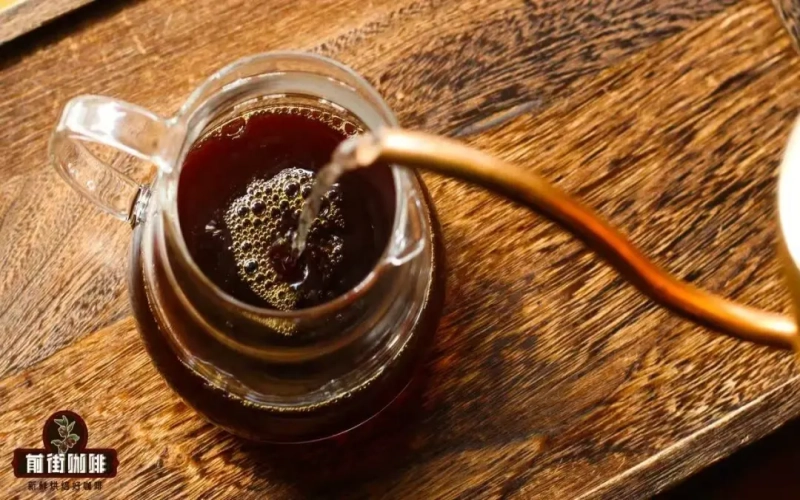
The Bypass Technique of Adding Water to Dilute Pour-Over Coffee: Why It Can Restore Flavors Masked by High Concentration
In the coffee world, adding water directly to brewed coffee has a special name—By pass. This operation bypasses the coffee grounds, does not participate in extraction, and is only used to adjust the concentration in the final cup. Many people are curious: can adding water really make coffee taste better? The answer depends on the situation—if the coffee itself is bitter and astringent, no amount of water will save it; but if the cup is properly extracted and just too concentrated, suppressing its flavors, then adding an appropriate amount of water can actually restore the deliciousness it should have. From Front Street's perspective, this article combines examples such as making Americano from espresso and adjusting concentration in pour-over to explain the sensory principles behind it and practical methods for judgment. [more…]

Why Does Dark Roast Coffee Still Taste Sour? Explaining the Causes Behind Differences in Acidity and Bitterness Across Roast Levels
Many people believe that dark roast coffee should be completely free of acidity, but is that really the case? Front Street Coffee has noticed that some friends unexpectedly taste acidity in dark roasted beans, and even suspect that the roaster didn't roast them properly. In fact, the acidity in coffee comes from two sources: the organic acids inherent in the green beans, and the acetic acid produced by the caramelization reaction during roasting. The darker the roast, the more the organic acids break down, and the acidity decreases accordingly—but it doesn't disappear entirely. The reason the acidity in dark roast coffee is hard to detect is that the intense bitterness and signature aromas of smoke and chocolate mask it. This article will explain, from the perspectives of the causes of acidity, differences in roast level, and perception mechanisms, why dark roast coffee can still carry acidity, and in which situations that acidity is more likely to be tasted. [more…]
What Can Coffee Grounds Actually Do? Are They Reliable for Gardening, Face Masks, and Bathing? A Clear Guide to the Correct Uses
Coffee grounds have transformed from waste into an internet-famous wonder, with social media platforms overflowing with clever uses for them—growing flowers, reducing facial puffiness, exfoliating in the shower, even losing weight. Yet those who try these tricks often end up with disasters: dead plants, swollen faces, clogged drains. Which of these popular uses actually hold up, and which are traps? This article starts with Starbucks' environmental initiative of giving away free coffee grounds, then examines one by one the scientific basis behind claims like using coffee grounds to grow flowers, reduce dark circles under the eyes, ease facial swelling, and aid weight loss in the shower—telling you what coffee grounds are truly good for and what details to watch out for when using them. If you've also accumulated a pile of coffee grounds and don't know what to do with them, or are thinking of jumping on the bandwagon, you might want to finish reading this first before you start. [more…]

The Truth About Kopi Luwak: What's the Difference Between Civet and Masked Palm Civet Coffee Beans?
Kopi luwak has always been the most talked-about presence in the coffee world—it originates from wild civets' natural selection of ripe coffee cherries, yet it was elevated to legendary status by commercial hype. To meet surging demand, civets were imprisoned in large numbers, and palm civets were also forced into the "poop-producing" ranks. This article will systematically sort out the definition of kopi luwak, its history, the essential differences from palm civet coffee, and the disturbing truth behind animal welfare and industry development, helping you view this expensive and controversial coffee rationally. [more…]
How Does Roast Level Affect Coffee Acidity? A Guide to Nearly Acid-Free Espresso and Pour-Over Single-Origin Bean Recommendations
Many people want to find coffee beans that are completely acid-free, but in reality, coffee that contains absolutely no acidic substances at all hardly exists. The so-called "acid-free" coffees on the market are often just extremely low in acidity, to the point where it is hard to detect. The acidity level of coffee is mainly influenced by variety, growing environment, processing method, and roast level, among which the degree of roasting is especially key—the darker the roast, the more acidic substances are broken down, and the more prominent the bitterness and roasted aromas become, making it easier to mask any remaining acidity. This article will explain the principles behind this and recommend three nearly acid-free Front Street Coffee dark roasts according to flavor intensity: Brazil Queen Estate, Golden Mandheling, and Jamaica Blue Mountain, helping you choose beans precisely based on your taste preferences. [more…]
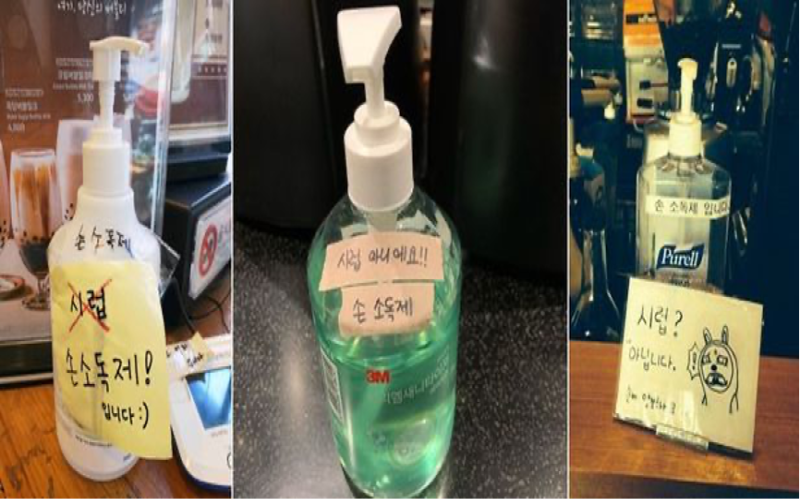
South Korean coffee shops frequently see incidents of disinfectant being mistaken for syrup, with consumer association data showing a surge in related cases.
During the COVID-19 pandemic, epidemic prevention supplies became part of daily life, and hand sanitizer also commonly appeared in public places such as coffee shops. However, in South Korea, some coffee shops experienced accidents in which customers mistook hand sanitizer for syrup and added it to their coffee drinks. Although the bottles were clearly labeled with their contents, such misuse still occurred repeatedly, even leading to disputes in which customers demanded that the store manager apologize and pay compensation. Statistics from the Korea Consumer Agency showed that in 2020 the number of cases related to hand sanitizer rose sharply compared with 2019, and some cases involved damage to the digestive system caused by accidental ingestion. While maintaining epidemic prevention measures, coffee shops also face the challenge of how to make labels more conspicuous and reduce misuse. [more…]
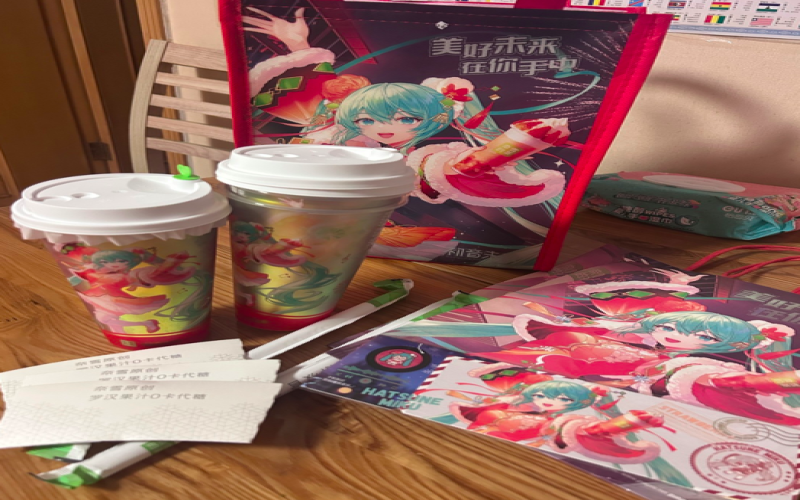
Nayuki's collaboration with Hatsune Miku sparks a cosplay controversy, internal emergency halt on employees' abstract stunts
Nayuki launched a collaboration with Japanese virtual singer Hatsune Miku, releasing a theme song, limited-edition drinks, and merchandise, attracting a large number of fans to visit stores and check in. However, some store employees cosplayed as Hatsune Miku in exaggerated ways, such as wearing masked headpieces, and were jokingly called by netizens "the century's meeting of the realist and abstract schools," sparking heated discussion. The brand subsequently issued an urgent notice strictly prohibiting employees from cosplaying as Hatsune Miku again, believing that such behavior damages the brand image and may invite complaints. But many fans said they were not offended and instead found it amusing. This collaboration controversy reflects the delicate balance between employees' individualized expression and brand management when tea beverage brands cooperate with ACG IPs. [more…]

Luckin Coffee Teams Up with Honor of Kings to Launch Ten Co-branded Themed Cups, Store Employees Say the Pressure to Identify Them Is Intense
Luckin Coffee's collaborative campaign with the hit mobile game Honor of Kings has officially launched, coinciding with the game's tenth anniversary celebration and drawing widespread attention from players. The collaboration features a special drink inspired by in-game equipment called "Pain Mask · Tamarind Americano," along with merchandise such as hand fans, insulated tumblers, and gold-stamped badges. During the campaign, stores nationwide are using a three-piece collaboration set consisting of takeaway cups, cup sleeves, and paper bags, with the most eye-catching item being as many as 10 themed cup designs covering 5 game characters. The rich variety has thrilled players but placed a double burden on store staff in terms of identification and stocking. Front Street Coffee continues to follow developments in the coffee industry and brings you frontline observations. [more…]
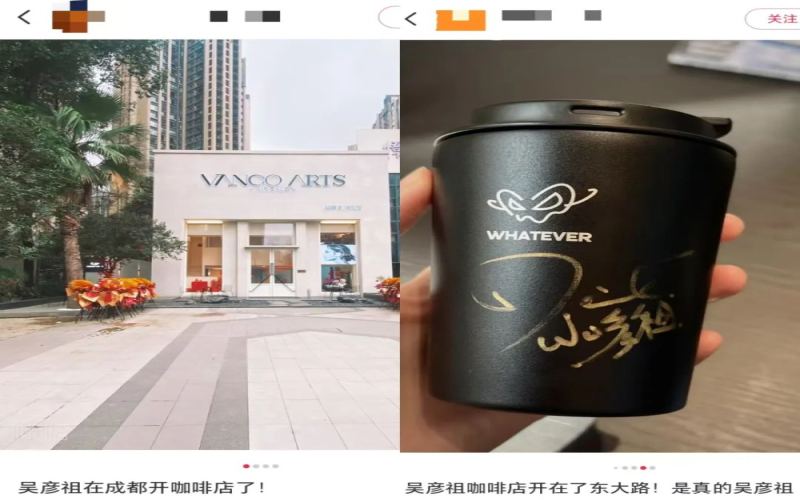
Daniel Wu Opens WHATEVER COFFEE in Chengdu: Minimalist Philosophy and Market Scrutiny Under Star Power
Recently, the coffee brand WHATEVER COFFEE, founded by actor Daniel Wu, opened its first physical store on Dongda Road in Chengdu, sparking a wave of social media check-ins. This shop-in-shop, sharing space with a barbershop, features a minimalist black, white, and gray aesthetic. Its menu focuses on classic coffees and simple flavored drinks, priced between 20 and 34 yuan. The brand logo, a mask hand-drawn by Daniel Wu, symbolizes shedding pretense and returning to authenticity. In fact, the brand entered the coffee market as early as last June. Now, with the Chengdu store serving as a test outlet, a second independent location is already being scouted. Celebrities opening coffee shops is nothing new—from JJ Lin to Jay Chou—but behind the built-in traffic, whether the products and services themselves can withstand market scrutiny remains a topic worth watching. [more…]

Why Does Coffee Taste Sour? A Complete Analysis from Roast Development to Acidity Quality
Many people feel confused when they taste acidity in coffee, but coffee beans themselves are rich in a variety of acidic substances. Before the turn of the millennium, mainstream dark roasting caused the acidity to break down or be masked, and it was only after light roasting became popular in the specialty coffee era that acidity could be clearly perceived. But coffee is not better the more acidic it is—what we should pursue is "acidity quality" rather than simple "acidity level." Acidity level is the intensity of the sour taste, and when too high it becomes sharp and hard to accept; acidity quality, on the other hand, combines with other sensory impressions and can evoke positive flavors such as citrus or smoked plum. The quality of acidity is influenced by many factors, including growing altitude, soil fertility, processing, and brewing. Front Street Coffee will break down these factors in detail in this article to help you truly understand coffee acidity. [more…]
Why Is Mocha Coffee Fading from Menus? A Complete Trace from Yemen's Mocha Port to Italian Chocolate
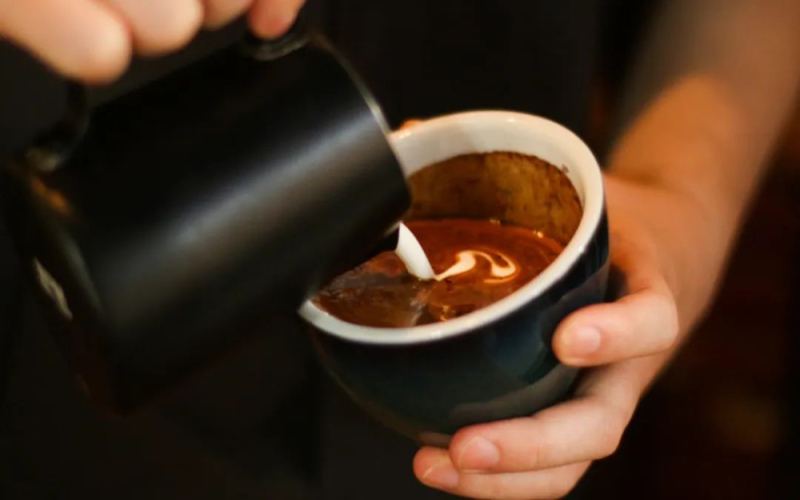
Mocha was once a classic on Italian menus alongside latte and cappuccino, but it is now increasingly disappearing from specialty coffee shops. Its name originates from the Port of Mocha in Yemen—from the 15th century onward, coffee beans were shipped through this port, and the sacks were marked "MOCHA," so Europeans collectively called the beans exported from there mocha coffee, and in the early period it even became synonymous with coffee. In the 18th century, Italy, in an attempt to recreate the chocolate notes of mocha beans, tried adding cocoa powder to coffee, which later evolved into a chocolate-added milk coffee with the spread of espresso machines. During the second wave, the combination of dark-roasted blend beans with chocolate sauce, cream, and other additions made mocha a representative sweet drink used to mask bitterness. The third wave of specialty coffee emphasized origin flavors, and together with the low-sugar healthy trend, the high-sugar, high-calorie mocha gradually fell out of favor in the market. The article sorts out its historical context and shares Front Street's method and recipe for making iced mocha. [more…]
Can Blended Coffee Beans Be Used for Cold Brew? A Detailed Guide to Cold Brew Ratios and Practical Experience
In the heat of summer, a refreshing glass of cold brew is the go-to choice for many coffee lovers looking to beat the heat. But have you ever considered that coffee beans blended from two or more varieties can also produce an outstanding cold brew? Cold brew, due to its low-temperature, long-duration extraction, has a richer, smoother mouthfeel, yet its floral and fruity notes gradually fade with storage time. This article draws on the hands-on experience of Front Street Coffee, first outlining the characteristics of cold brew and the advantages of blended beans, then recreating several blending experiments one by one: from Sidra with Geisha, Pacamara with Red Cherry, to Huakui paired with Strawberry Candy and Wangshan Geisha, and finally challenging the dark-roasted Queen's Estate blended with Flower God. Some of these recipes are full-bodied and layered, while others flop into a "mask of pain," yet they perfectly showcase the fun and possibilities of blended cold brew. [more…]
Can You Add Milk to Pour-Over Coffee? Flavor Evolution from Café au Lait to Japanese Methods, with Practical Tips
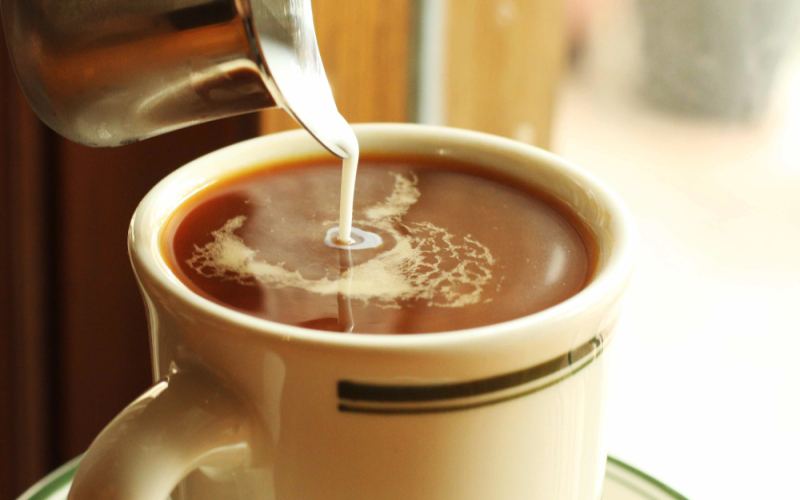
Whether pour-over coffee can be combined with milk is a topic debated by many coffee enthusiasts. In fact, this way of drinking coffee was already popular in 17th-century France under the name "Café Au Lait," translated in China as "Oulei coffee." Its coffee base is similar to pour-over, mixed with milk at a 1:1 ratio, and it later spread to Japan, where a high-extraction version evolved. The key to whether adding milk tastes good lies in the roast level: medium-dark roasted beans carry nutty and caramel notes, which when combined with milk form a balanced, buttery, chocolate-like flavor; while medium-light roasted coffee with acidic notes is easily masked by milk, turning into diluted sour milk. This article will trace this history and, using Front Street PWN Golden Mandheling as an example, provide a complete demonstration of making a cup of Café Au Lait along with tasting notes. [more…]